

Amazon’s auto marketplace is poised to become true disruptor
When Amazon launched the ability earlier this month for vehicle shoppers in 48 cities to buy new Hyundais directly on the e-commerce platform via participating dealerships, the door opened on a venture that could transform vehicle sales in the industry. The online giant continues to enroll more Hyundai dealerships in the program and next year intends to expand the auto sales platform to additional manufacturers, brands and cities while introducing new functionality.
“People talk about disruption all the time, but usually there’s nothing truly disruptive,” Presidio CEO Brodie Cobb said. “Amazon’s auto marketplace will be truly disruptive. Despite what the initial naysayers think, this will be a huge win for both consumers and dealers.”

Kevin Tynan, Director of Research
ktynan@thepresidiogroup.com
Amazon’s automotive marketplace puts U.S. auto dealers in digital fast lane
Amazon Autos has taken the first step in providing a true two-sided marketplace that matches automotive goods and services on one side with consumers on the other side. It’s classic Amazon with an online platform that enables browsing, ordering, financing and scheduling the pickup and delivery of Hyundai vehicles in a clear and secure environment. As an early iteration of a marketplace that will evolve as used vehicles are added and additional brands and dealerships in more cities are onboarded, Amazon Autos has the potential to add significant efficiency, transparency and liquidity to the new- and used-vehicle purchasing processes via franchised dealers.
The creation of an online automotive marketplace by Amazon provides immediate scope and scale for franchised dealers to keep pace in an increasingly digital retail environment. Per discussions with dealers participating in Amazon’s pilot, it appears that the e-commerce behemoth is not interfering at all with dealer economics on vehicles sales, trades, finance and insurance, etc. We presume Amazon will garner its economics through its typical relationship with advertisers. As Amazon looks to add other brands, it will be imperative to demonstrate to the remaining U.S. dealers that the company’s marketplace provides a better experience for the customer and the dealer. As dealers buy in, Amazon Autos has the potential to bring millions of new — and eventually used — vehicles from dealership inventory into its automotive marketplace, viewable by the nearly 250 million U.S. shoppers comfortable transacting on Amazon with minimal or no human interaction.
When Amazon’s e-commerce reach is applied to the U.S. automotive retail industry’s $1.6 trillion in revenue and more than 50 million vehicle transactions, auto retailers will be in view of a sizeable addressable market. The U.S. Census Bureau estimates that e-commerce retail sales in the U.S. were $300 billion in the third quarter, about 16% of the domestic total. U.S. e-commerce sales volume set a 12th consecutive quarterly record in 2024’s third quarter. Amazon’s forecasted revenue for 2024 is $575 billion, with $374 billion of that generated in North America and its third-party seller services and Amazon Web Services business units accounting for $230 billion. It is clear that the sheer magnitude of the North American auto retail market will be meaningful to Amazon and its shareholders.
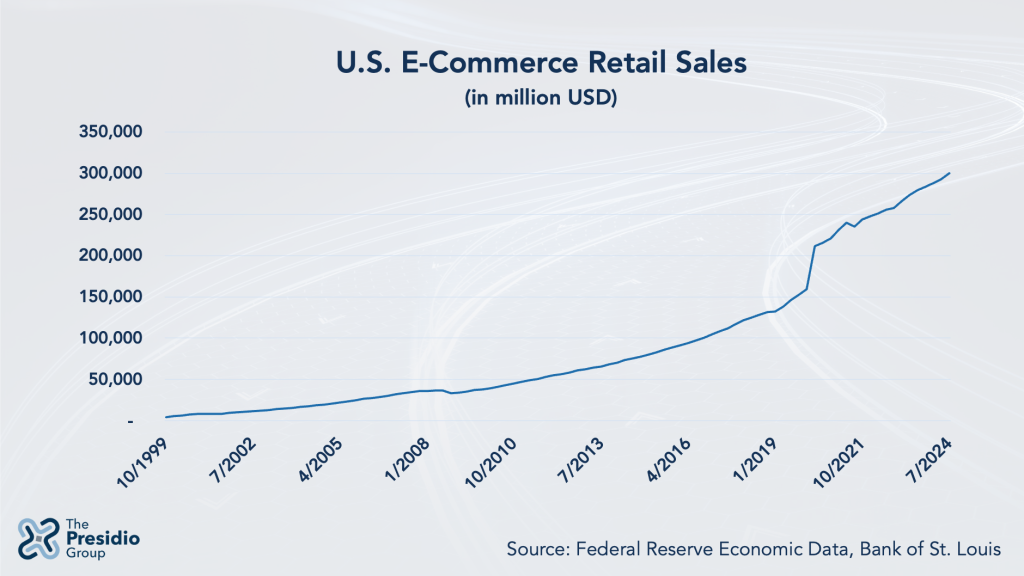
Leveraging Amazon’s e-commerce processes frees dealers to focus on profit drivers
It might be counterintuitive, but franchised dealers will be the primary beneficiary of Amazon’s automotive marketplace. A new massive distribution channel will be open immediately, and the economics of dealerships will improve over time. Amazon will charge dealers a flat fee to be on the marketplace versus unit-based pricing. As more of their vehicles are sold through the marketplace, dealers have the potential to amortize that expense over higher volume and eliminate substantial costs, refocusing their financial and human resources on higher margin aspects of the auto business.
Digitizing the sales process and leveraging Amazon Autos’ marketplace dynamic will free dealers from working the hardest on the business unit that generates the lowest margin. In 2024, the competitive peer group of full-line, publicly traded auto dealership groups generated 38.2% of revenue but only 18.0% of gross profit from new-vehicle sales. The same dynamic was true in the used-vehicle segment, which struggles to deliver double-digit percentage gross profit against the large financial and human commitment required to generate revenue. Conversely, dealerships’ parts counters and service bays represented only 10.3% of total revenue but 36.2% of gross profit, while F&I operations are near 100% gross margin for some dealership groups.
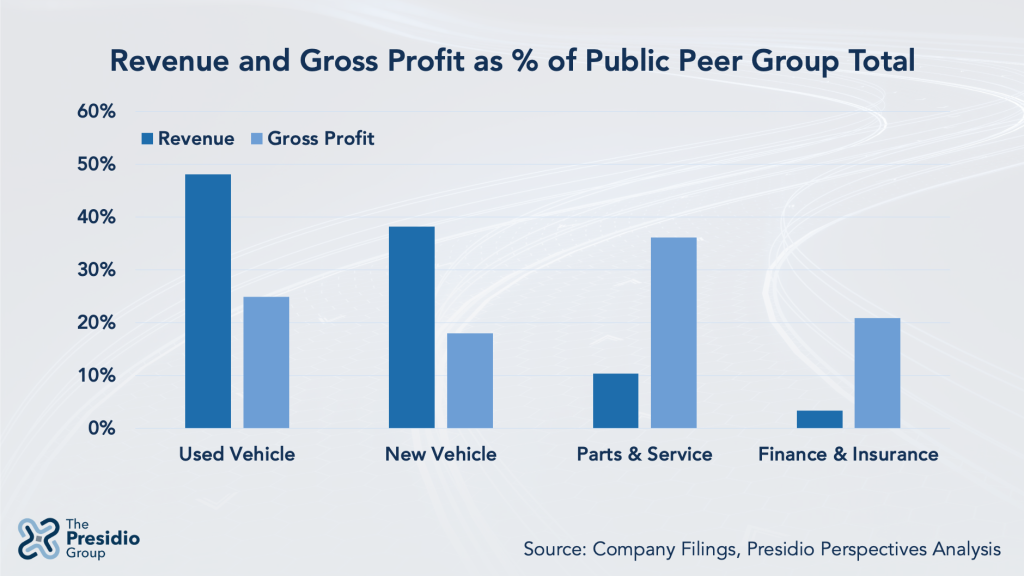
Amazon’s partnership with manufacturers creates discoverability for dealer profitability
The large addressable market of Amazon will create a no-pressure browsing environment for shoppers who can then remain in the process through the purchase, financing and scheduling of pickup — at little expense or effort to the automobile dealer until delivery preparation begins once the sale is finalized. Digitizing away the inefficiently expensive pain points in the vehicle purchase process will enable dealers to reduce bloated costs and deploy capital to their most profitable business units as vehicle sales throughput transitions from today’s traditional model to an online marketplace. As the process evolves, Amazon Autos has the capability and experience to smooth out the rough patches in the vehicle buying process for consumers, improving the perception of the value-add that dealers provide and the loyalty of customers as they engage in aftersales support and subsequent purchases.
A digital U.S. automotive marketplace with enough reach to achieve a critical mass of manufacturers, retailers and buyers will be complex and phased. Amazon and Hyundai first partnered in 2018 with a virtual showroom and launched a marketplace for Hyundai employees in 2023 before the Dec. 10 rollout to the general public in 48 cities.
While the potential opportunities and risks are still developing at this early stage, Amazon’s placement of its digital retail heft behind the U.S. vehicle market should not be underestimated. Early adopting new-vehicle dealers can be the first to leverage Amazon’s scope and scale as the dominant e-commerce platform in the U.S., while those that minimize the evolution of North American auto retailing into a digital online marketplace risk being left behind.