
A historic low in lease returns through at least 2029 will strip franchised full-line dealerships of a once-reliable sourcing tool. The resulting margin compression, shifting acquisition costs, and diminished price and valuation transparency are making the U.S. used-vehicle segment more challenging. From 2015 through 2019, lease penetration averaged 30% of 16.9 million annual transactions, feeding franchised dealers roughly five million off-lease vehicles a year – inventory that fueled certified pre-owned sales through 2022. Since the COVID-19 supply chain disruption, automakers have maintained a tighter supply-demand balance and reined in factory incentives, holding lease penetration to 21% of annual transactions now trending near 16 million units.
Certified Pre-Owned Unit Sales Fall From Peak As Franchises Decline 8.4%
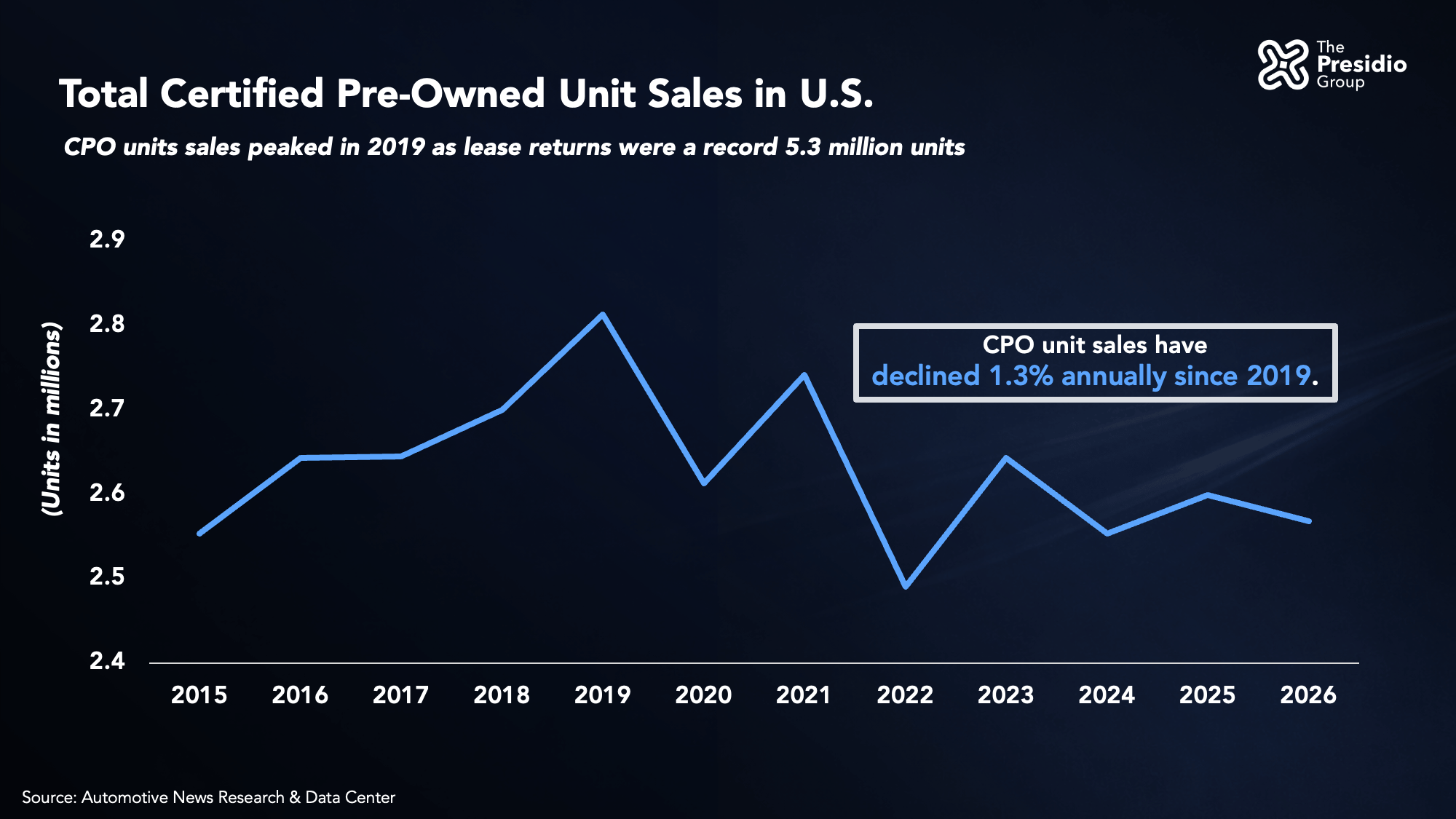
Franchise dealers are on pace to sell 244,316 fewer certified pre-owned (CPO) vehicles in 2026 than they did at the 2019 peak of 2.8 million. On a same-store basis, the 2026 run rate for CPO sales per franchise – 80 units through June – is down from a 2019 peak of 88. The number of franchise dealers has fallen by 2,712 since 2019. CPO vehicles are largely off-lease, late-model, low-mileage vehicles whose financing, parts, repair and warranty are backed by the original manufacturer – a competitive advantage for franchised dealerships.
Losing the Inside Track on Millions of Lease Returns Muddles Used-Vehicle Acquisition
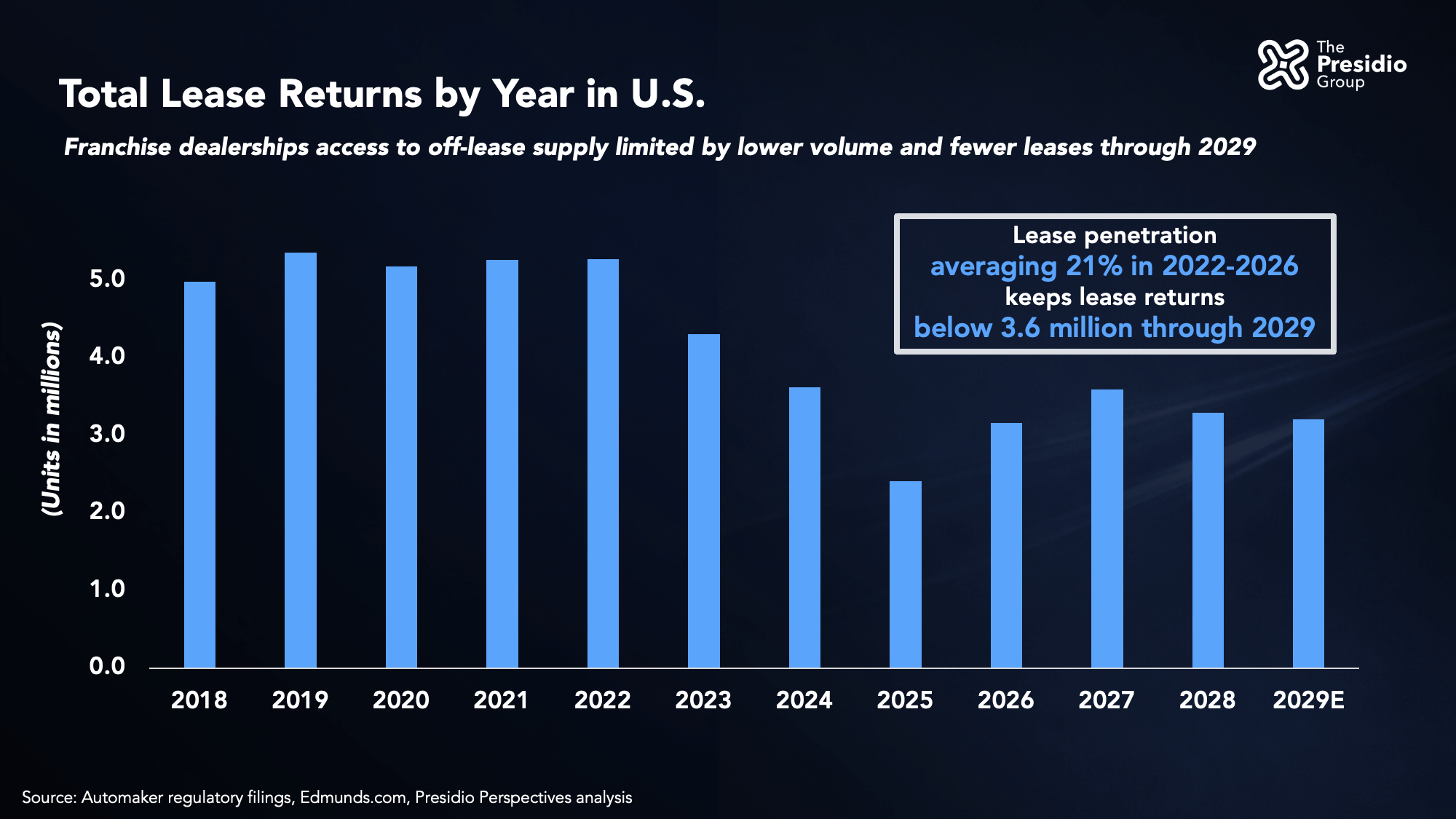
To offset a restricted flow of off-lease units from the captive finance companies of their automaker partners, franchised dealerships are being forced into more liquid wholesale and trade-in markets to gather used-vehicle inventory. Annual lease returns totaled at least 5 million units from 2018 through 2022, giving full-line dealerships an ample supply of partially depreciated vehicles while new-vehicle prices were inflating amid the COVID-19 supply chain disruption. Three years later, in 2025, lease returns had bottomed out at 2.4 million. Automakers, pursuing profitability through price increases rather than volume growth, appear content with a 16 million-unit U.S. market that includes modest incentive spending, including lease penetration near 20% – or approximately 3.2 million lease returns rolling in 36 months from now, based on the average three-year lease term.
Used-Vehicle Segment’s Declining Margins Risk Making That Business a Lower Priority
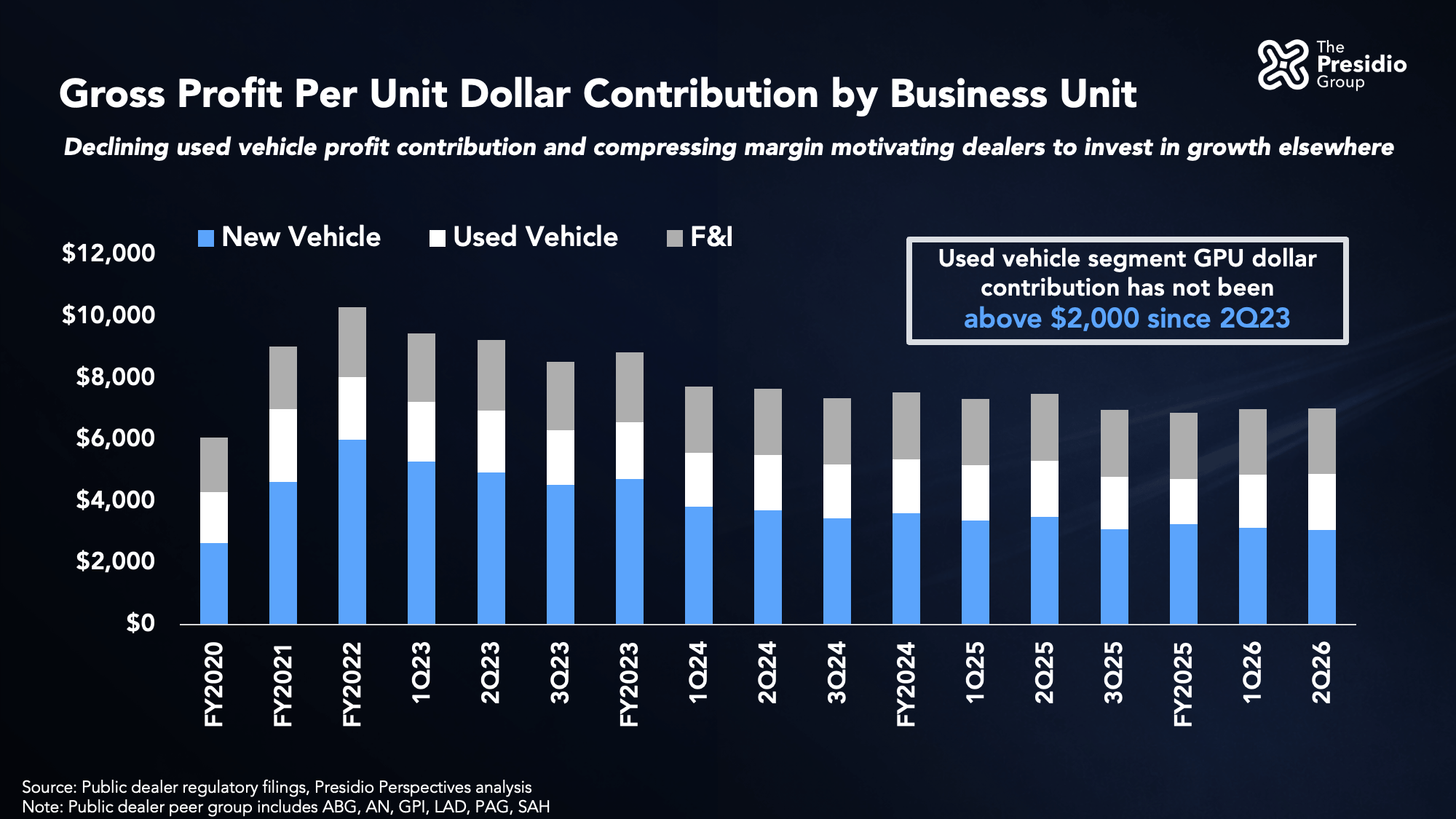
Since 2021, the used-vehicle segment has contributed the smallest dollar amount to total vehicle gross profit per unit (GPU) of any business line among the peer group of full-line public dealership groups. As new-vehicle and finance and insurance (F&I) operations carry more of the GPU load, this dynamic could push franchised dealerships to divert resources toward segments with greater profit potential. Same-store used-vehicle gross margin for that peer group was 5.5% in the second quarter of 2026 – the second-lowest reading since at least 2018, and just 10 basis points better than the first quarter. For the same group, new-vehicle gross margin overtook used-vehicle gross margin in 2021, reversing a consistent 250-to-300-basis-point gap that had favored used vehicles every year since 2009.
Better Inventory-to-Sales Ratio Lessens the Need for Aggressive Lease Deals From Automakers
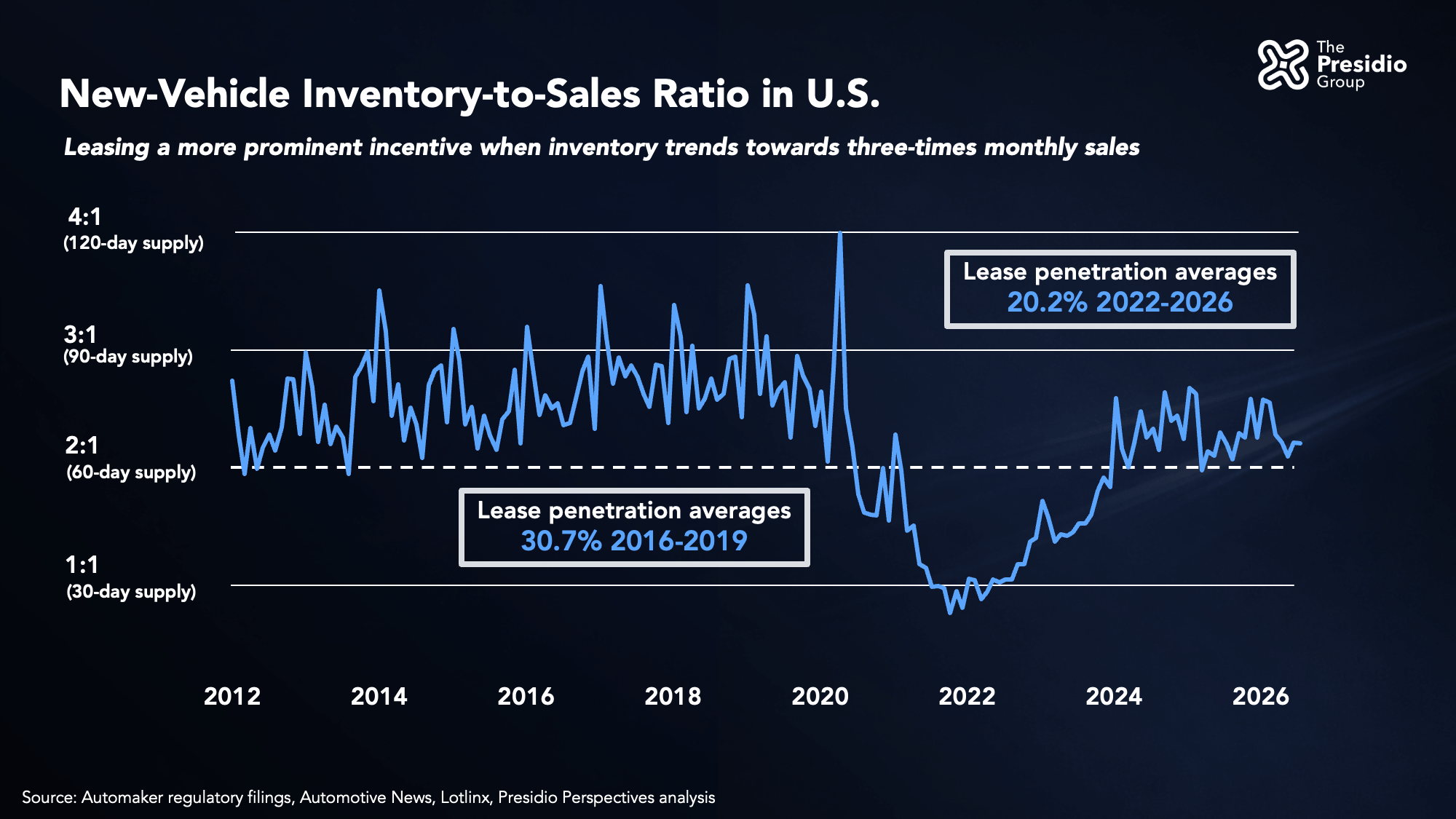
Production discipline among automakers selling in the U.S. has let manufacturers reduce their reliance on factory incentives, including aggressive lease deals, since 2021. Keeping output in line with demand eases pressure on the retail channel in the near term, though it will also limit the flow of off-lease and CPO units dealers can access in the future – removing an ancillary competitive advantage from the retail base. A 2x inventory-to-sales ratio represents a manageable 60-day supply of new vehicles. Staying close to that target has let automakers maintain average annual lease penetration of 21% from 2022 through midyear 2026. The ratio climbed above 3x nine times from 2016 through 2019, requiring lease penetration above 30% to clear the retail channel each of those years, as automakers absorbed the residual-value risk of an overstuffed lease portfolio.
New-Vehicle Franchises Are Losing Used-Vehicle Market Share on All Fronts
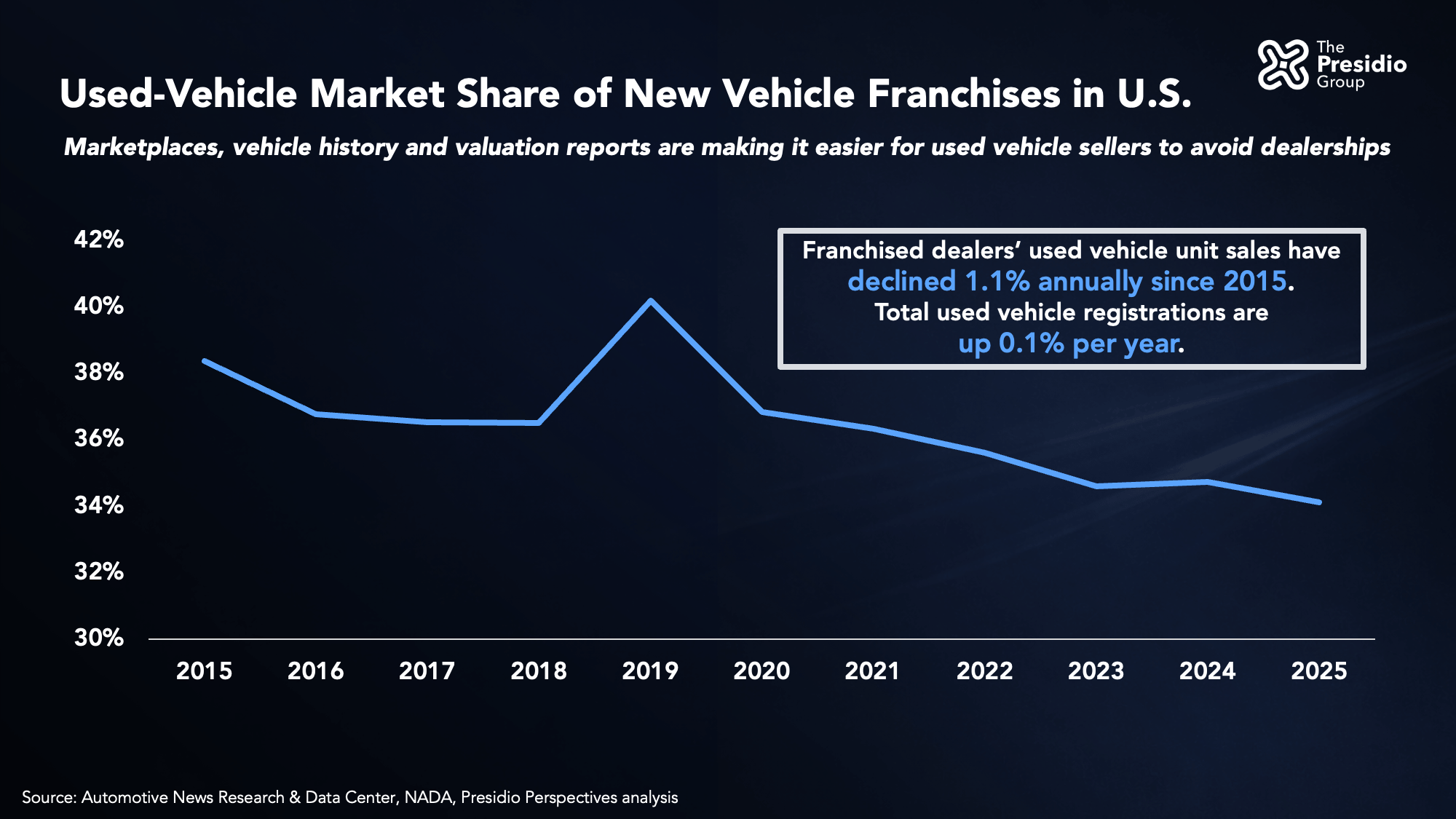
The scope and scale of challengers for used-vehicle market share in the U.S. are eroding the position of the franchised dealer base. Online marketplace platforms, along with accurate, instant valuation and vehicle-history reports, have all evolved to give independent and private sellers the tools to acquire and move used vehicles without a franchised dealer’s help. Total used-vehicle registrations topped 38 million in 2025 – the highest since 2021 – while new-vehicle dealerships accounted for just 34.1% of that total, the sixth consecutive year of market-share decline and the lowest share since 2015.